



 Investing in a home heating system is a major financial decision that directly impacts your daily comfort and your monthly utility costs. When our intense Colorado winters arrive, your heating equipment has to work overtime to keep your living spaces safe and warm. If your system is getting older, you are likely wondering how long a furnace lasts and how to know when it is time to stop patching it up and buy a new one. Our comprehensive furnace services give local families the honest data and professional guidance they need to make the right choice for their properties.
The Average Lifespan of a Modern Furnace
In general, a well-maintained central furnace will last between 15 and 20 years. However, this timeframe is not set in stone. Several factors can either extend or shorten the operational life of your specific heating equipment:
- Maintenance History: Systems that receive annual professional tune-ups run cleaner, experience less friction, and consistently outlast units that are ignored until they break down.
- Installation Quality: A system that was incorrectly sized or poorly installed will short-cycle or run too long, causing parts to wear out much faster than normal.
- Usage Habits: Because Colorado winters are long and cold, local heating equipment naturally experiences more intense operational stress than units installed in milder states.
If your system is crossing its 15th birthday, it is entering its senior years, meaning you should start preparing yourself for the possibility of an upgrade.
Signs Your Furnace Is Nearing the End
You do not want to wait for a total system failure on a freezing night to figure out your heating equipment is done. Watch for these common warning signs that your unit is failing:
1. Spiking Utility Bills
As mechanical parts age and collect dust, they lose their efficiency. If your gas or electric bills are rising steadily during the winter but your heating habits have stayed the same, your unit is working much harder and running longer cycles just to provide the same amount of warmth.
2. Frequent and Costly Repairs
An occasional small repair is normal over a couple of decades. However, if you find yourself calling a technician every winter to replace a different broken part, your system is likely experiencing a domino effect of wear and tear.
3. Strange Noises and Visual Clues
A healthy system should operate with a consistent, quiet hum. Loud banging, clanking, squealing, or rattling sounds indicate that internal components are loose, misaligned, or completely broken. Additionally, look at your burner flame if you use a gas system. A healthy flame is bright blue. A yellow or flickering flame signals incomplete combustion, which can produce dangerous carbon monoxide gas.
Deciding to Repair vs. Replace: The Rules of Thumb
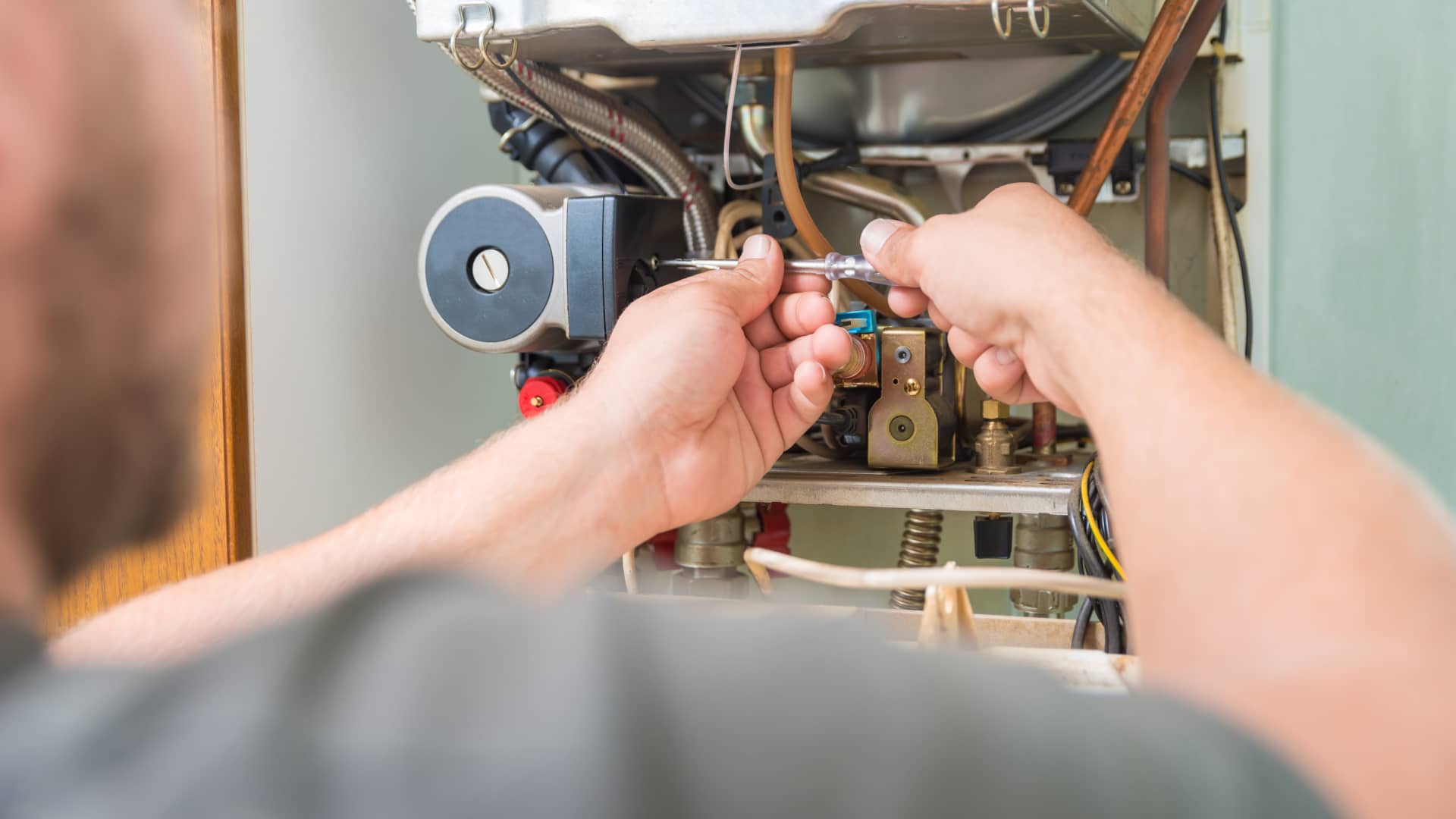
When you are facing a significant repair bill for an aging system, it can be hard to know which path makes the most financial sense. Professionals look at a few simple calculations to make a recommendation.
The 50% Rule
If the cost of a single repair is 50% or more of the price of a brand-new heating system, you should almost always choose to replace the unit. Investing big money into a system that is already breaking down rarely pays off.
The $5,000 Rule (The Age multiplied by Repair Cost)
A popular industry math trick is to multiply the age of your heating system by the exact cost of the repair. If the total number is over $5,000, replacement is generally the smarter long-term financial move. For example:
- A 12-year-old system needing a $300 repair equals $3,600. (Repair it)
- A 16-year-old system needing a $400 repair equals $6,400. (Replace it)
The Hidden Benefits of Modern System Replacement
While buying a new heating unit requires an upfront cost, upgrading an old system brings several immediate advantages to your home:
- Higher Energy Efficiency: Older units often operate at around 60% to 70% efficiency. Modern high-efficiency models can reach outstanding ratings, meaning nearly all the fuel you pay for is turned directly into heat for your home.
- Better Indoor Air Quality: New equipment moves air more effectively and works seamlessly with modern filtration. If you have concerns about dust or allergens, pairing a new unit with our specialized indoor air quality systems creates a much cleaner breathing environment.
- Warranty Protection: A new installation comes with a fresh manufacturer parts warranty, shielding you from unexpected repair bills for years to come.
How to Extend the Lifespan of Your Current System
If your system is still relatively young and you want to ensure it reaches its maximum age, consistent care is essential. Make sure you are changing your air filter every 1 to 3 months to prevent the system from overheating due to restricted airflow.
Most importantly, commit to routine preventative service. We recommend learning how often you should service your furnace to catch tiny issues before they turn into system-ending disasters. If you are exploring other home updates, you can also look into when to upgrade your electrical panel or check for outdated home wiring signs to make sure your household infrastructure is ready for modern equipment.
Frequently Asked Questions
What is the most expensive furnace part to repair?
The heat exchanger is the most critical and expensive component to fix. If a heat exchanger cracks, it can leak dangerous carbon monoxide gas into your home. Because the part is so expensive to replace, a cracked heat exchanger on an older system almost always means it is time for a new unit.
Can a furnace blast cold air when it is failing?
Yes. If your system is blowing cold air, it could be a simple thermostat setting error, a dirty flame sensor, or a failed electronic ignition system. A technician can quickly determine whether it is a simple fix or a sign of a larger mechanical failure.
Are there rebates available for a new heating system?
Absolutely! Many local utility companies offer great financial incentives for homeowners who upgrade to energy-efficient models. There are also federal tax credits available for qualifying high-efficiency systems, which can help lower your overall project costs.
Contact Pulse Home Service for an Honest Assessment
Determining how long a furnace lasts in your specific home comes down to a professional evaluation of your current unit’s performance, safety, and physical wear. Our team of licensed HVAC technicians is committed to providing transparent, clear advice without any aggressive sales pressure.
Contact Pulse Home Service today to schedule a professional evaluation of your heating system. We proudly serve homeowners throughout the area, including Westminster, Boulder, Broomfield, Lafayette, Longmont, and Northglenn.